|
|
Agia Pelagia holiday resort Crete Island GREECE
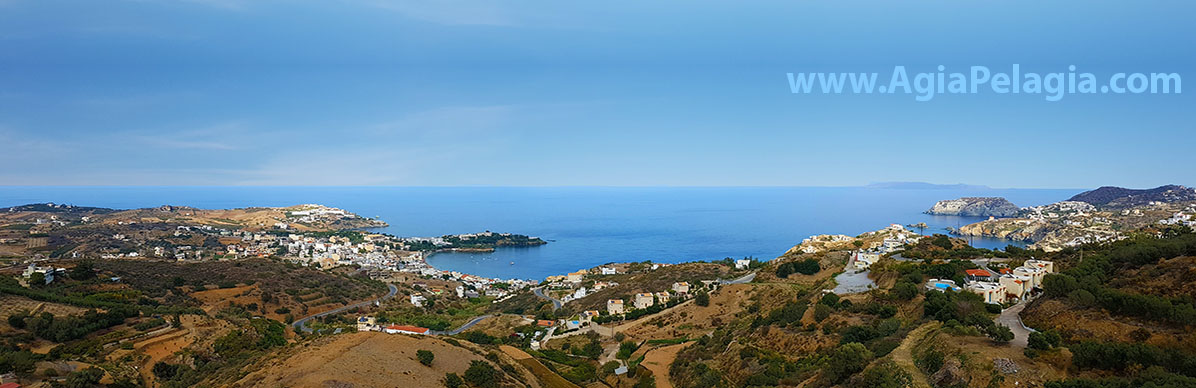
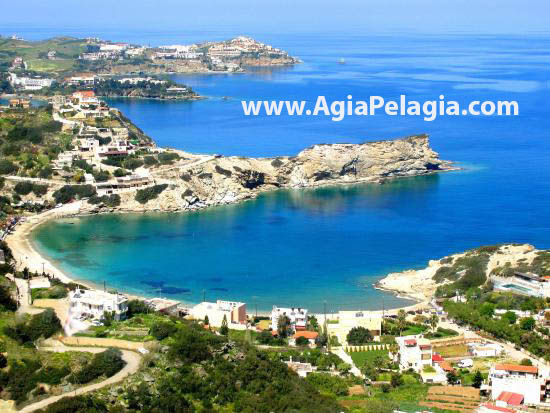
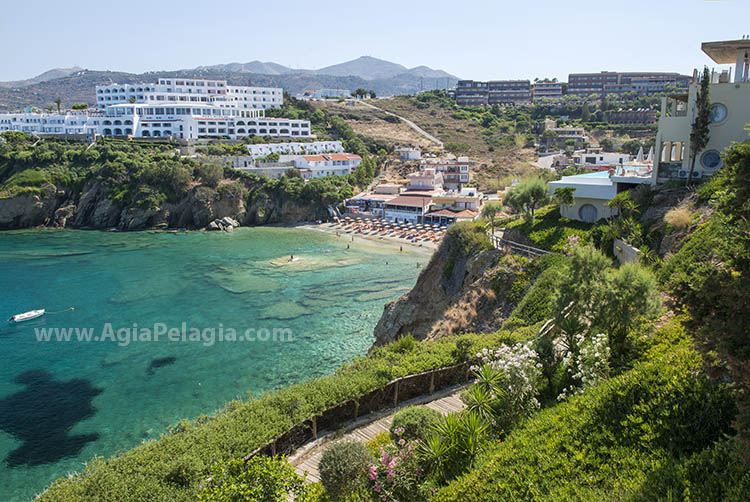
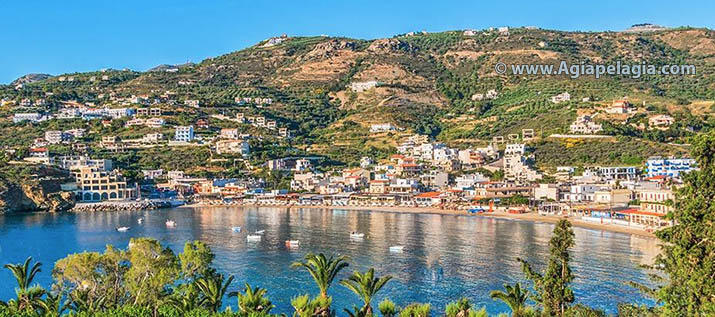
Agia Pelagia is a seaside fishing village built in the centre of a picturesque amphitheatric bay, it is located on the north coast of Crete at 23 km northwest from Heraklion (Herakleion), capital city of the Island of Crete and distants 25 km from the international airport of Heraklion and 23 from the ferry port.
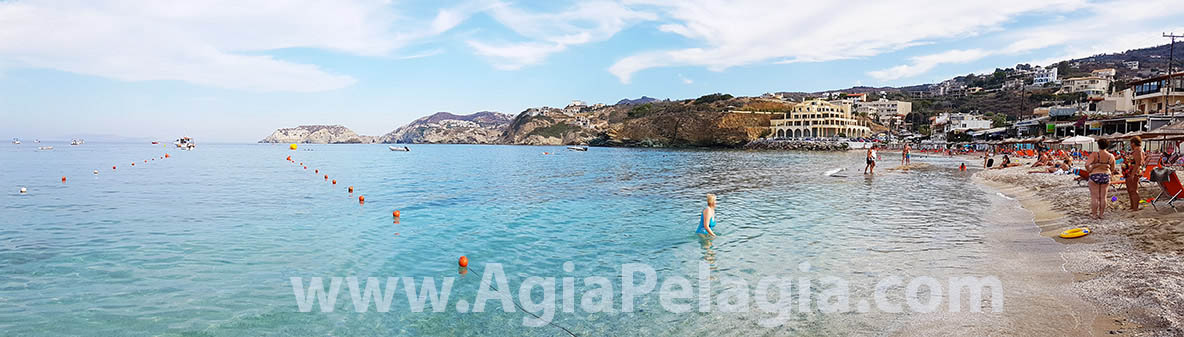
Agia Pelagia takes its name from the homonymous church, in the Monastery of the Sebbathians, ruins of which are found at a distance of 1 km west of the village. During the last decades years, the resort has known a big tourist development, as its sandy beaches attract many visitors who find here all kinds of services. From Agia Pelagia you can visit the post-minoan graves and the University (Pritanion) of the 4th century B.C. which were found in 1970 at the site Kladistos (or Kladotos/Kladissos) and support the view that this was the site of the ancient city of Apollonia. Worth visiting is also the nearby cave (chapel), with the name "Evresi", where - according to legend - local people found the icon of Agia Pelagia (Santa Marina)
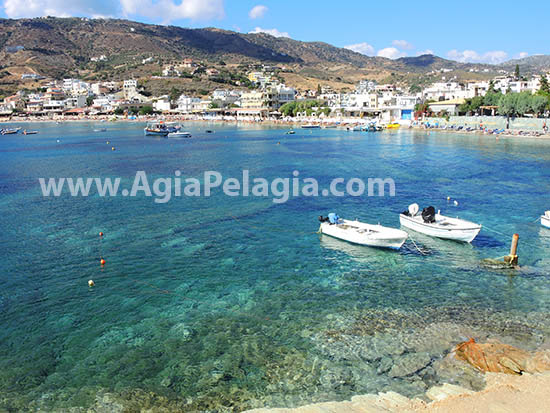
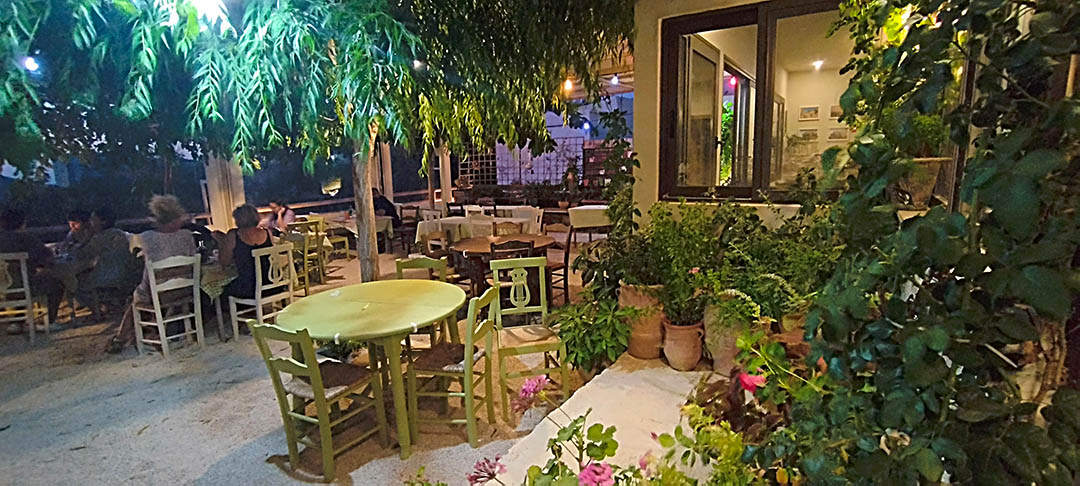
In the village you can find many taverns, offering traditional but also international dishes, bars, cafes, shops and boutiques, which will invite you to exciting short walks through the little streets.
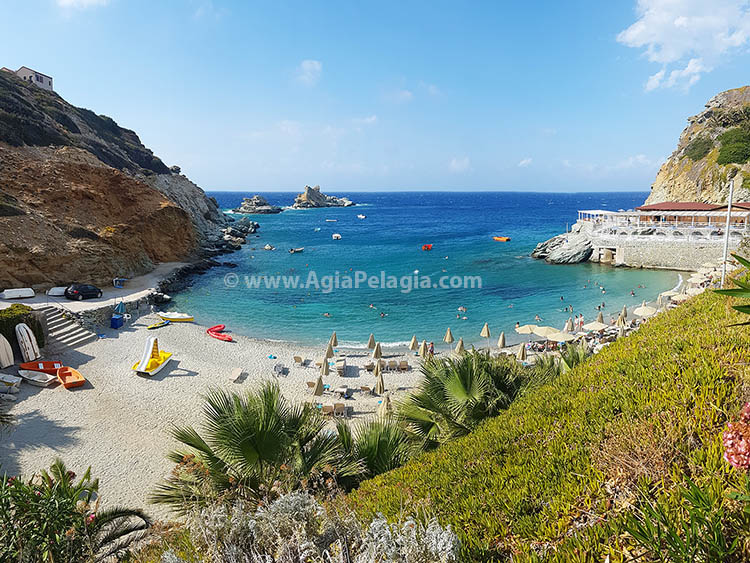
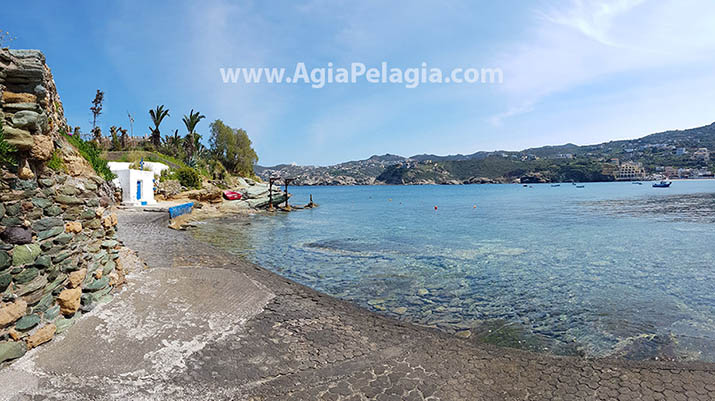
Surrounded by mountains and hills, Agia Pelagia lies right in the middle of Crete (which makes it easy to be used as a base for tours and excursions around Crete island), with about 9 smaller sandy and rocky beaches (except of the central bay) reached easily by feet for those who prefer more space and privacy rather than big / busier beaches.
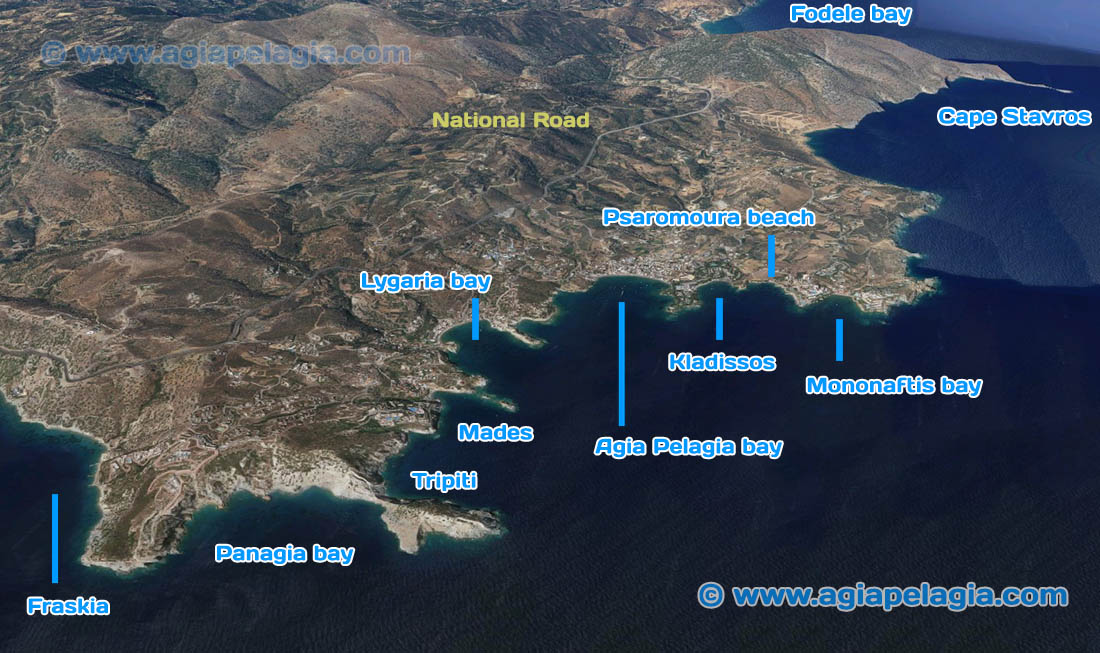
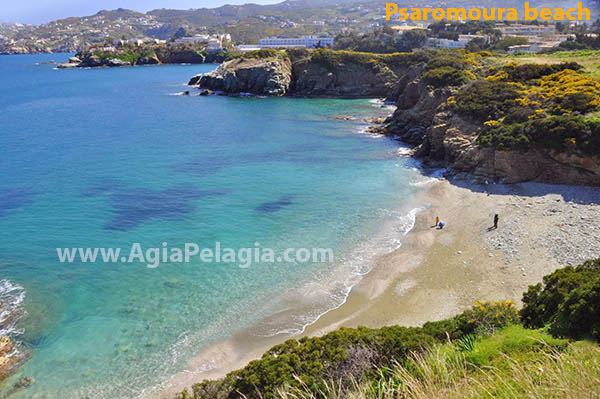
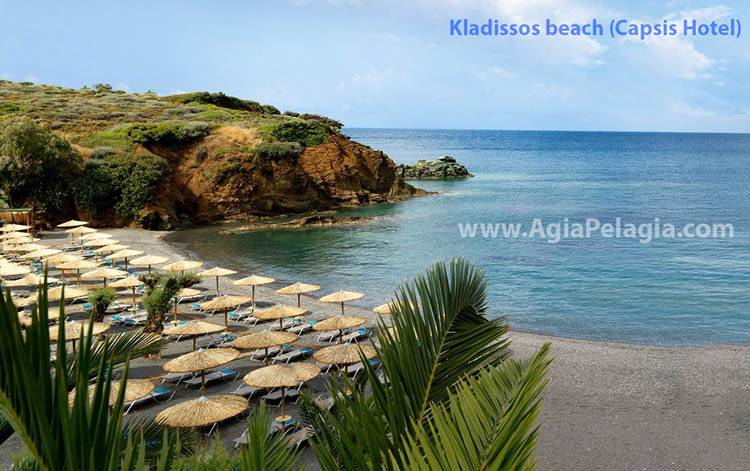
The main areas are: Agia Pelagia bay (main beach - and the busiest), Lygaria Bay, Mononaftis bay, Kladissos bay, Made beach, Psaromoura beach, Fylakes beach, Ammoudi.
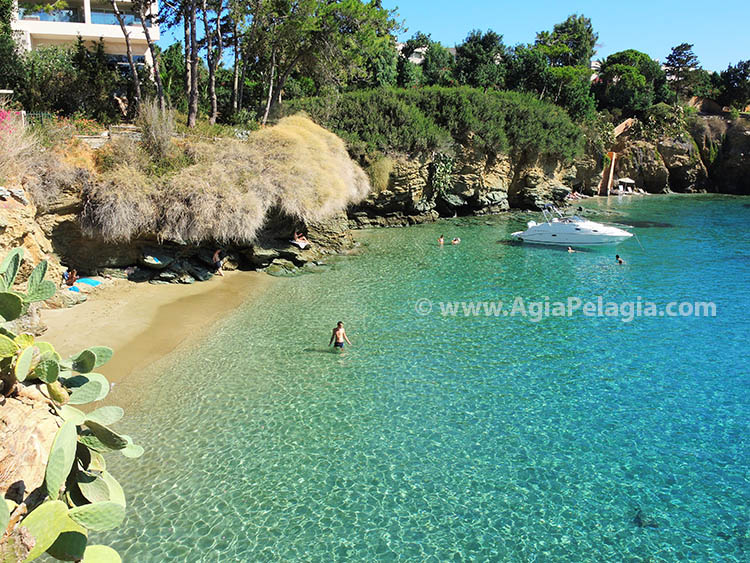
Though there are several (little, almost hidden) beaches in the area (many of which can be reached only by feet or by boat).
Near Agia Pelagia you will find several interesting places to visit, like the Minoan Palace of Knossos, the Archaeological Museum of Heraklion, the traditional villages of Achlada, Fodele, Rogdia and Anogia up to the highest mountain of Crete Idi (also called "Ida" or "Psiloritis" - 2.456m high).
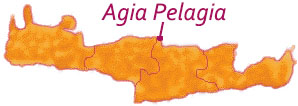
Island of CRETE |
HELLENIC REPUBLIC
|
The are innumerous resorts and points of interest on the island of Crete - the nearest
holiday resorts to Agia Pelagia are:
Ammoudara (10 km)
Heraklion City (14 km)
Kokkini Chani (23 km)
Anissaras 33 km
Hersonissos 35 km
Stalida 40 km
Malia 41 km
Bali (31 km)
Panormos (30 km)
Rethymnon (60 km) |
Address:
Agia Pelagia, Heraklion (Iraklion)
Postal Code (ZIP) GR-71500
Crete Island,
HELLAS
GPS coordinates:
Latitude: 35.40634
Longitude: 25.018373 |
|
TRANSPORTATION
Book FERRY Tickets online
Book FLIGHTS online
BUS Service
Taxi Service
Rent a Car
Book HOTELS
|
BOOK CHEAP
HOTEL OFFERS
in AGIA PELAGIA
Holiday Resort

|
|